i sing the bicycle trailer
that connects to my bicycle without a hitch (actually it connects with a clever bicycle hitch that is quick to attach and yet secure)
i sing the bicycle trailer
which i hardly even notice is behind me unless i am carrying two big boxes of kitty litter
i sing the bicycle trailer
which allows me to cart big and heavy loads, as long as they fit on the trailer, and as long as they do not weigh more than one hundred pounds.
i sing the bicycle trailer
especially when it makes the neighborhood kids smile and laugh at the bobbing heads of spring flowers on their way to my garden.
i sing the bicycle trailer
because it makes the green lights work for me (the detectors in the street do not recognize my trailer-less bicycle)
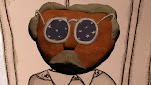
oh, i hope that i am like schultze in the movie "schultze gets the blues," who, a retired salt miner in germany, continues to pull behind his bicycle his bicycle trailer, carrying loads of coal, loads of accordion, and sometimes, as all bicycle trailers occasionally must, loads of empty.
Tuesday, October 16, 2007

Monday, October 15, 2007
A ton
I have never owned a car and never really felt the need to own one. So one thing I have never been able to wrap my mind around is why do so many people feel they need a machine that weighs a ton just to go from one place to another?
We all have legs or wheel chairs which can get us around. If I need to go further and faster than my legs can take me, I ride a bicycle. If I am going someplace that mass transit can take me, and I don't feel like biking, I can ride mass transit. If I need something bigger than I can carry, I can pretty much always get it delivered for a few dollars more.
A couple weeks ago I took the Minnesota Energy Challenge, and answered questions about my lifestyle so that my carbon footprint could be estimated and I could be told some ways to reduce it. The first questions was: How many cars are there in your household? I said zero, which is the truth. Based on that and on the size of my apartment, I was told that my carbon footprint was so much smaller than the average Minnesotans'. There are certainly things I can do to reduce it even more, and I am working on that, but I felt good that mine was already pretty small.
When I heard the MN Energy Challenge auditor talk to other folks, most of what she asked them about were their driving habits. But what I couldn't figure out was why they even had to drive in the first place. Some people say they have to drive because they have to get to their job. But my choice of job and the place I live were based on if I could get to them by foot, bike, transit, or all three. I wouldn't be able to take a job that I could only drive to, so that is nothing that would ever happen to me.
Because if you have a machine that weighs a ton, your whole life revolves around that machine. Where you work, where you buy your groceries, what you do when you are not working. In my case, my world revolves around those other three modes of transportation, which I feel always gives me more options than my car-enslaved friends.
I don't need that ton to get me around. I don't need that ball and chain. What I can't figure out is why so many other people do think they need it, and keep on needing it, despite all the environmental problems this machine causes.
It's easy for me. I'd rather that the polar bears keep their habitat and that Bangladesh and The Maldives don't wash away than that I have a machine that weighs a ton to get me from point A to point B.
We all have legs or wheel chairs which can get us around. If I need to go further and faster than my legs can take me, I ride a bicycle. If I am going someplace that mass transit can take me, and I don't feel like biking, I can ride mass transit. If I need something bigger than I can carry, I can pretty much always get it delivered for a few dollars more.
A couple weeks ago I took the Minnesota Energy Challenge, and answered questions about my lifestyle so that my carbon footprint could be estimated and I could be told some ways to reduce it. The first questions was: How many cars are there in your household? I said zero, which is the truth. Based on that and on the size of my apartment, I was told that my carbon footprint was so much smaller than the average Minnesotans'. There are certainly things I can do to reduce it even more, and I am working on that, but I felt good that mine was already pretty small.
When I heard the MN Energy Challenge auditor talk to other folks, most of what she asked them about were their driving habits. But what I couldn't figure out was why they even had to drive in the first place. Some people say they have to drive because they have to get to their job. But my choice of job and the place I live were based on if I could get to them by foot, bike, transit, or all three. I wouldn't be able to take a job that I could only drive to, so that is nothing that would ever happen to me.
Because if you have a machine that weighs a ton, your whole life revolves around that machine. Where you work, where you buy your groceries, what you do when you are not working. In my case, my world revolves around those other three modes of transportation, which I feel always gives me more options than my car-enslaved friends.
I don't need that ton to get me around. I don't need that ball and chain. What I can't figure out is why so many other people do think they need it, and keep on needing it, despite all the environmental problems this machine causes.
It's easy for me. I'd rather that the polar bears keep their habitat and that Bangladesh and The Maldives don't wash away than that I have a machine that weighs a ton to get me from point A to point B.
Monday, October 8, 2007
Brand on the Brain!
I live in Northeast Minneapolis and do not have a car, so the Parkway Theater seems so far away from me. But with new management, they have been having such great movies there that it I simply must deal with my distance-fever.
Last Tuesday, I was lured down there by a Gene Kelly/Frank Sinatra double feature. It was very rainy, so I put my bike on the #11 bus and took a long nap-filled bus ride nearly all the way there. It was showtime by the time the bus got to 46th and 4th, so I rode as fast as I could the last few blocks. By the time the double feature was over, the rain has stopped, so I had a nice power bike ride home.
Yesterday afternoon it was the new Guy Maddin film that lured me. My intention was to bike all the way down to the theater on Portland Avenue, but there was such a headwind and it was so muggy, that when I saw the rail tracks by the Metrodome I waited for the next Hiawatha line train and took it down to Minnehaha Parkway. Then I had such a lovely ride along the parkway to Chicago Avenue and I even had time to have a coffee before the movie started. After the movie, I had a nice tailwind that got me home in just a little over half an hour.
I get that brand on the brain about distance, and way south Minneapolis seems so far, and St. Paul certainly seems so far, that when I actually do the trip and go there, it all seems like a big to do over nothing. But it also is good to see distances for what they really are - distances. My car-owning friends think nothing about crossing town. Maybe I think too much about it. Maybe the happy medium is somewhere in between, and maybe there is a nice off-street segment of the trip to make it a little less painful, and even awe-inspiring autumn beautiful.
Last Tuesday, I was lured down there by a Gene Kelly/Frank Sinatra double feature. It was very rainy, so I put my bike on the #11 bus and took a long nap-filled bus ride nearly all the way there. It was showtime by the time the bus got to 46th and 4th, so I rode as fast as I could the last few blocks. By the time the double feature was over, the rain has stopped, so I had a nice power bike ride home.
Yesterday afternoon it was the new Guy Maddin film that lured me. My intention was to bike all the way down to the theater on Portland Avenue, but there was such a headwind and it was so muggy, that when I saw the rail tracks by the Metrodome I waited for the next Hiawatha line train and took it down to Minnehaha Parkway. Then I had such a lovely ride along the parkway to Chicago Avenue and I even had time to have a coffee before the movie started. After the movie, I had a nice tailwind that got me home in just a little over half an hour.
I get that brand on the brain about distance, and way south Minneapolis seems so far, and St. Paul certainly seems so far, that when I actually do the trip and go there, it all seems like a big to do over nothing. But it also is good to see distances for what they really are - distances. My car-owning friends think nothing about crossing town. Maybe I think too much about it. Maybe the happy medium is somewhere in between, and maybe there is a nice off-street segment of the trip to make it a little less painful, and even awe-inspiring autumn beautiful.
Friday, October 5, 2007
More Critical Mass
Here is a letter to the editor I wrote to the Star Tribune in response to a column by Katherine Kersten.
In her column about the “bike-riding mob” that she says own the street of Minneapolis during Critical Mass rides, Katherine Kersten neglected to mention the car-driving mob that owns the streets for the rest of the month.
I do wonder when the vote was taken to give streets over to cars. All you have to do is look at a pre-1900 photo or painting, or watch a Western movie, for that matter, to see that streets used to be shared by many users. Streets were where people gathered for special events, and where children played. Pedestrians, bicycles and carriages all shared the road without a single mode dominating. At some point, cars took over the streets, and all those shared uses ceased.
The streets are really owned by those who pay for them. I pay taxes that repair streets, clear them of snow, put up signals, and so on, and yet I do not own a car. And my tax dollars do not pay for the infrastructure that I do use: sidewalk repairs are paid through assessments to homeowners, sidewalks are shoveled by individual property owners. This signals a strong bias in local government toward car transportation. Twenty percent of the households in Minneapolis do not own cars. These people are paying local taxes for car infrastructure, and getting very little for their own use.
In the last hundred years, city streets have been re-engineered from community gathering places into veins and arteries in the car transportation system. Traffic signals and signs and road rules are all based on the needs of cars. Pedestrians and bicycle riders are subservient to cars in these spaces.
A Critical Mass bike ride is a success when there are enough bicycle riders that the bikes do, for a short time, become the primary mode of transportation on a street. As the temporarily dominant mode, the bicycles determine the traffic speed and rules, just like cars do the rest of the time. Bicycles certainly do marginalize cars for a few minutes a month during a Critical Mass ride, just like cars marginalize bicycles and pedestrians for the whole rest of the month.
Kersten thinks that the authorities in Minneapolis should clamp down on the rides in order to get them to stop. But when I was in Portland, Oregon earlier this year, a series of articles in the newspaper described how the Critical Mass rides there were dying out. The cause of the demise of the rides was that many bicyclists felt they were no longer necessary. Portland is a national leader in changing traffic laws and re-directing transportation money to even the playing field for bicycles. These days, in Portland, cars are seen as just one piece in the transportation puzzle rather than the dominant mode, and streets are spaces that should be shared by everybody and all kinds of vehicles. And the Critical Mass rides were one of the reasons for this change in thinking and policy.
In her column about the “bike-riding mob” that she says own the street of Minneapolis during Critical Mass rides, Katherine Kersten neglected to mention the car-driving mob that owns the streets for the rest of the month.
I do wonder when the vote was taken to give streets over to cars. All you have to do is look at a pre-1900 photo or painting, or watch a Western movie, for that matter, to see that streets used to be shared by many users. Streets were where people gathered for special events, and where children played. Pedestrians, bicycles and carriages all shared the road without a single mode dominating. At some point, cars took over the streets, and all those shared uses ceased.
The streets are really owned by those who pay for them. I pay taxes that repair streets, clear them of snow, put up signals, and so on, and yet I do not own a car. And my tax dollars do not pay for the infrastructure that I do use: sidewalk repairs are paid through assessments to homeowners, sidewalks are shoveled by individual property owners. This signals a strong bias in local government toward car transportation. Twenty percent of the households in Minneapolis do not own cars. These people are paying local taxes for car infrastructure, and getting very little for their own use.
In the last hundred years, city streets have been re-engineered from community gathering places into veins and arteries in the car transportation system. Traffic signals and signs and road rules are all based on the needs of cars. Pedestrians and bicycle riders are subservient to cars in these spaces.
A Critical Mass bike ride is a success when there are enough bicycle riders that the bikes do, for a short time, become the primary mode of transportation on a street. As the temporarily dominant mode, the bicycles determine the traffic speed and rules, just like cars do the rest of the time. Bicycles certainly do marginalize cars for a few minutes a month during a Critical Mass ride, just like cars marginalize bicycles and pedestrians for the whole rest of the month.
Kersten thinks that the authorities in Minneapolis should clamp down on the rides in order to get them to stop. But when I was in Portland, Oregon earlier this year, a series of articles in the newspaper described how the Critical Mass rides there were dying out. The cause of the demise of the rides was that many bicyclists felt they were no longer necessary. Portland is a national leader in changing traffic laws and re-directing transportation money to even the playing field for bicycles. These days, in Portland, cars are seen as just one piece in the transportation puzzle rather than the dominant mode, and streets are spaces that should be shared by everybody and all kinds of vehicles. And the Critical Mass rides were one of the reasons for this change in thinking and policy.
Saturday, September 29, 2007
Critical Mass Ride September 2007
This is a four minute version of much of my journey through the Minneapolis Critical Mass bike ride on September 28, 2007. For an excellent summary of the ride, see Chuck Olsen and The Uptake's documentary cut in a middle night frenzy from video shot by four different cameras.
I enjoy partaking in the Critical Mass rides because it is the one time a month that the streets of this town belong to something other than automobiles.
Streets used to be the center of the city. The streets used to be where community happened. I love Western movies, and one of the reasons that I love them is that they really show what the street meant to a community in the years before the automobile.
In Westerns, the street is where everything happened. It is where you got hung, where you did the shoot-out, and every good bar brawl worth its name broke thru the saloon door and ended up in the street.
Two of my favorite Westerns are about taking back the long-gone streets of Old West towns. In both "A Fistful of Dollars" and "High Noon," a pedestrian takes back the streets of a town from a group of violent bullies (or two groups of violent bullies in "Fistful").
At some point, we gave our streets over to the car. There was no vote on it. It just happened. Today, streets are where the opposite of community happens. If you took a bar brawl out of the saloon door and into the street everybody would just get run over and that would be that.
When the car dominates the street, everything about the street is about the car. Traffic signals, lane markings, pavement, everything about the street is about the movement and parking of cars. That means that if you are a walker, you must walk like a car, and if you are a bicyclist, you must bike like a car.
During Critical Mass, bikes dominate the streets, and just for a few minutes they marginalize cars in the same way that cars marginalize bikes (and pedestrians) the rest of the time. As a taxpayer who does not own a car, I feel like Critical Mass is the only time in the month where I really get to use the streets that I pay for.
The street under the control of bikes is a very different place. It is a fun place. It is a place where you can't stop smiling. It isn't such a hurried place. It is a relaxed place. It is a place where a jogger can run in the middle of the street and not get a tire stripe up his back (there was just such a jogger riding in the middle of the bike traffic this ride).
That is why I like Critical Mass, and why I have the delusion during the rides that I am the Clint Eastwood or the Gary Cooper ridding the streets of violent bullies, even if only for a very short time.
Enough talk. Here's the video, finally. And for more viewing options, visit here.
I enjoy partaking in the Critical Mass rides because it is the one time a month that the streets of this town belong to something other than automobiles.
Streets used to be the center of the city. The streets used to be where community happened. I love Western movies, and one of the reasons that I love them is that they really show what the street meant to a community in the years before the automobile.
In Westerns, the street is where everything happened. It is where you got hung, where you did the shoot-out, and every good bar brawl worth its name broke thru the saloon door and ended up in the street.
Two of my favorite Westerns are about taking back the long-gone streets of Old West towns. In both "A Fistful of Dollars" and "High Noon," a pedestrian takes back the streets of a town from a group of violent bullies (or two groups of violent bullies in "Fistful").
At some point, we gave our streets over to the car. There was no vote on it. It just happened. Today, streets are where the opposite of community happens. If you took a bar brawl out of the saloon door and into the street everybody would just get run over and that would be that.
When the car dominates the street, everything about the street is about the car. Traffic signals, lane markings, pavement, everything about the street is about the movement and parking of cars. That means that if you are a walker, you must walk like a car, and if you are a bicyclist, you must bike like a car.
During Critical Mass, bikes dominate the streets, and just for a few minutes they marginalize cars in the same way that cars marginalize bikes (and pedestrians) the rest of the time. As a taxpayer who does not own a car, I feel like Critical Mass is the only time in the month where I really get to use the streets that I pay for.
The street under the control of bikes is a very different place. It is a fun place. It is a place where you can't stop smiling. It isn't such a hurried place. It is a relaxed place. It is a place where a jogger can run in the middle of the street and not get a tire stripe up his back (there was just such a jogger riding in the middle of the bike traffic this ride).
That is why I like Critical Mass, and why I have the delusion during the rides that I am the Clint Eastwood or the Gary Cooper ridding the streets of violent bullies, even if only for a very short time.
Enough talk. Here's the video, finally. And for more viewing options, visit here.
Saturday, September 22, 2007
World Carfree Day
Today, September 22, is World Carfree Day. Events are happening around the world to point out the destructive impacts of car transportation, and how free life can be without that car ball and chain to weigh you down. I don't know about any events going on in Minneapolis to celebrate this day, so I'll throw up a little bit of confetti and give a hip hip.
Today, on World Carfree Day, I am reflecting on some of the city policies here that make it difficult to live without a car. These policies seem to me to really encourage car use and discourage use of other transportation modes.
First of all, during the winter, the city scrapes the snow down to the surface on all the streets but leaves sidewalk cleaning to the private sector. This means that carfree folks pay taxes to clear the streets that they don't use, and have to walk a hazardous tangle of ice and snowpiles on the sidewalk space that they do use. The city also pays for street repairs from its general fund and assesses individual property owners for sidewalk repairs. This seems to be a great way to get homeowners to hate walking when they look at their bills. The city also lights up the middle of the streets with its streetlighting system, but if people want streetlights that light up the sidewalk they have to pay assessments.
All these policies encourage car use. It's the whole chicken and egg thing: government is using your tax money to make it easier for you to drive so you do drive. It isn't because cars are better, it's because the state is forcing you to use them.
Despite all this, 20% of Minneapolis households do not own cars. These people are really paying for the transportation choices of the car households. Many of those carfree households are that way for economic reasons. This is really a social justice issue. The poor are subsidizing the transportation choice of those who are wealthier than they.
And that's what I'm thinking here in my carfree life in very car-intensive Minneapolis on World Carfree Day.
A family who lives near me recently went from a car family to a carfree family. Their car-aches and bus-aches and bike-aches and victories are all documented here:
http://carfreefamily.wordpress.com/
And here is where you will find more information on World Carfree Day:
http://www.worldcarfree.net/wcfd/
Today, on World Carfree Day, I am reflecting on some of the city policies here that make it difficult to live without a car. These policies seem to me to really encourage car use and discourage use of other transportation modes.
First of all, during the winter, the city scrapes the snow down to the surface on all the streets but leaves sidewalk cleaning to the private sector. This means that carfree folks pay taxes to clear the streets that they don't use, and have to walk a hazardous tangle of ice and snowpiles on the sidewalk space that they do use. The city also pays for street repairs from its general fund and assesses individual property owners for sidewalk repairs. This seems to be a great way to get homeowners to hate walking when they look at their bills. The city also lights up the middle of the streets with its streetlighting system, but if people want streetlights that light up the sidewalk they have to pay assessments.
All these policies encourage car use. It's the whole chicken and egg thing: government is using your tax money to make it easier for you to drive so you do drive. It isn't because cars are better, it's because the state is forcing you to use them.
Despite all this, 20% of Minneapolis households do not own cars. These people are really paying for the transportation choices of the car households. Many of those carfree households are that way for economic reasons. This is really a social justice issue. The poor are subsidizing the transportation choice of those who are wealthier than they.
And that's what I'm thinking here in my carfree life in very car-intensive Minneapolis on World Carfree Day.
A family who lives near me recently went from a car family to a carfree family. Their car-aches and bus-aches and bike-aches and victories are all documented here:
http://carfreefamily.wordpress.com/
And here is where you will find more information on World Carfree Day:
http://www.worldcarfree.net/wcfd/
Thursday, August 30, 2007
Transportation Dictatorship/Transportation Democracy
After the collapse of the 35W freeway bridge, there were several letters and commentaries blaming the bridge collapse on the funding of non-car forms of transportation. People wrote that funding light rail transit drew resources away from freeway bridges. Loopiest of all was Katherine Kersten, Star Tribune columnist, who called Senator Oberstar to task because he funded bicycle transportation amenities, and that made the bridge collapse. These people are certainly subjects of the transportation dictatorship, their brains so warped by it that they can't see outside the limits.
We live in a transportation dictatorship. The state has decided that transportation is the same as cars, and that you do not get around if you do not do so by car. So the vast majority of state money spent on transportation is spent on building up the car transportation infrastructure.
What would it take us to get to a transportation democracy? It would take the division of that transportation funding into equal amounts, so that as much state money was spent on developing bicycle trails that was spent on car things, that transit funding equaled highway funding, and that pedestrian amenity funding was the same as that spent on car infrastructure (by the way, the city is fixing sidewalks around my block now, which is great, but they are billing the work to the homeowners. Why does the city fund street repairs through the general fund and charge homeowners for sidewalk repairs? Because that is how cities act in the transportation dictatorship.)
If we had a real transportation democracy, we would be able to make real choices. If we requested that our government spent equal amounts on cars, transit, bikes and walking, we would have a wonderful pedestrian transportation system. Biking would be a great way to get around. Transit would get you where you needed to go. But if we gave car transportation the same funding as the other modes, we would have a pretty poor car transportation system.
That is because car transportation costs so much more than all those other methods. That is why no other nation in the world has built as intense a car transportation system as we have. And a car transportation system is the least sustainable - it deteriorates the fastest.
A real transportation democracy would relegate car transportation to a fairly minor role, because it wouldn't be able to compete with the other modes given equal funding.
Let's get away from the transportation dictatorship and start building transportation democracy.
We live in a transportation dictatorship. The state has decided that transportation is the same as cars, and that you do not get around if you do not do so by car. So the vast majority of state money spent on transportation is spent on building up the car transportation infrastructure.
What would it take us to get to a transportation democracy? It would take the division of that transportation funding into equal amounts, so that as much state money was spent on developing bicycle trails that was spent on car things, that transit funding equaled highway funding, and that pedestrian amenity funding was the same as that spent on car infrastructure (by the way, the city is fixing sidewalks around my block now, which is great, but they are billing the work to the homeowners. Why does the city fund street repairs through the general fund and charge homeowners for sidewalk repairs? Because that is how cities act in the transportation dictatorship.)
If we had a real transportation democracy, we would be able to make real choices. If we requested that our government spent equal amounts on cars, transit, bikes and walking, we would have a wonderful pedestrian transportation system. Biking would be a great way to get around. Transit would get you where you needed to go. But if we gave car transportation the same funding as the other modes, we would have a pretty poor car transportation system.
That is because car transportation costs so much more than all those other methods. That is why no other nation in the world has built as intense a car transportation system as we have. And a car transportation system is the least sustainable - it deteriorates the fastest.
A real transportation democracy would relegate car transportation to a fairly minor role, because it wouldn't be able to compete with the other modes given equal funding.
Let's get away from the transportation dictatorship and start building transportation democracy.
Subscribe to:
Posts (Atom)